|
Adapted from R.C. Sheriff's successful British play, Journey's End is an early Hollywood World War I tale directed by James Whale, who would go on to much success as the director of the horror classics Frankenstein, The Invisible Man, and Bride of Frankenstein.
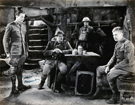
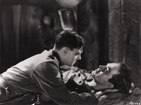
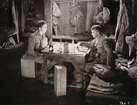
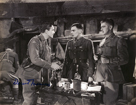
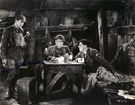
Against the background of life in the trenches of a group of officers behind British lines at St. Quentin, France, the characters live in a world of fear, disillusionment, precariousness, friendship, loyalty, naivety, guilt, and abandon. Captain Stanhope, (Colin Clive) company commander, long over the exuberance and assuredness of the early war days, has taken to whisky as a solitary refuge for the psychological strain he must endure with each new attack order given from headquarters. The German machine guns are relentless and the immobility of trench warfare results in countless deaths. The men in his command see Stanhope's deterioration and regard him with a mixture of respect and fear. Lieutenant Osborne, (Ian Maclaren) an older officer, affectionately known as "uncle," provides Stanhope with the confidence and "willing ear" he so desperately needs. Into this nightmare enters second Lieutenant Raleigh, (DM) a young, inexperienced officer, whose sister is Stanhope's love-interest back home and who is as enthusiastic as his captain is bleak. Stanhope's already vitiating psyche is further blighted by Raleigh's presence as he feels the young officer must be judging him as an embittered, unreliable drunkard. After many clashes and the death of Osborne on another raid, Raleigh, himself, falls victim to the Hun and dies in Stanhope's arms. Stanhope is left to his own inexorable fate.
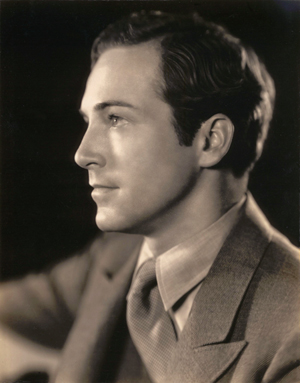
While showing its stage roots, Journey's End is a riveting experience, and its splendid cast enliven memorable characters. Colin Clive, (himself a tortured alcoholic who died tragically at age thirty-seven) creates an unforgettable Stanhope. Possessing a wonderfully tragic and expressive face and an actor of sensitive yet forceful talent, Clive is Stanhope down to the cigarette butt. DM, unceremoniously walking into the role that all young Hollywood actors were coveting at the time, portrays Raleigh with a youthful gleam that soon turns into a more sober reality when he receives his "baptism of fire." His death scene is both sincere and moving, thus capping an auspicious film debut.
James Whale who directed Journey's End in London's West End imported Clive from England to reprise his role of Stanhope. Interestingly, Clive came from a prominent military family and had aspired to such a career in his youth. Whale, himself a former British officer and German prisoner of war, manages to bring his own understanding of the relationships inherent in men living in the confines of the trenches to the screen. Journey's End has not received the time-honored accolades of its contemporary All Quiet on the Western Front. However, its impact is just as potent and its performances are more realistically intuitive.
|